
Read The Latest News From Us
Bearing Knowledge

Read The Latest News From Us
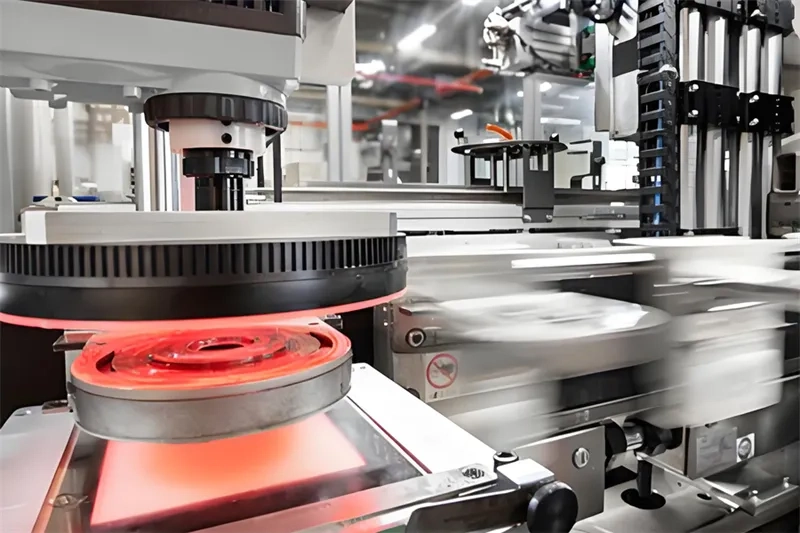
Rolling bearings are widely used in applications such as basic functions, large-scale machinery and equipment, and aircraft engines. The clearance of the cage directly affects the lubrication and oil film of the rolling bearing, causing heat generation and a rapid increase in the impact and frictional forces on the bearing rings, ultimately leading to damage to the cage and even affecting the service life of the bearing.
Noise levels and the stability of the cage play a crucial role in the performance of rolling bearings. If the cage clearance is not properly controlled, it will not only cause instability in the bearing cage and rolling elements, but also... What specific effects does cage clearance have on the wear of rolling bearings?
The impact of cage clearance on the normal operation of rolling bearings is primarily reflected in the rationality of the design of the cage pocket clearance and the cage guidance clearance. Under given cage guidance clearance conditions, increasing the pocket clearance will impair the stability of the cage; furthermore, inner ring guidance is more likely to cause cage instability than outer ring guidance.
Through experimental studies examining the impact of cage clearance on rolling bearing wear, wear marks on the cage and balls were observed. By comparing the wear of the cage and balls under different guide clearance and pocket clearance conditions, the following conclusions were drawn:
(1) Both the guide clearance and the pocket clearance affect the wear of the cage and the balls, but the guide clearance has a more significant impact on cage wear than the pocket clearance.
When the guide clearance is designed inappropriately, it exacerbates the wear of the cage pockets.
(2) When the guide clearance is small, wear on the cage's guide surfaces is severe; as the guide clearance increases, wear on the cage's guide surfaces gradually decreases. At the same time, the guide clearance affects the wear of the cage pockets; when (3)
the degree of wear on the cage's guide surfaces and pockets gradually decreases as the pocket clearance increases.
So, what factors affect the stability of a bearing cage?
(1) Axial Load The axial load of a bearing refers to the load acting in the direction of the bearing's axis; in layman's terms, it is the force that pushes the inner ring outwards relative to the outer ring.
During bearing operation, the inner ring rotates whilst the outer ring remains stationary. Taking the axial load as the independent variable, when the bearing speed remains constant, the stability of the cage gradually increases as the axial load increases. The cage is relatively stable.
This is because the increase in axial force restricts the sliding of the balls, reducing the frequency of collisions between the balls and the cage. Furthermore, as the friction caused by the lubricant is low and the variation in vortex acceleration is minimal, this results in the
(2) Radial Load A radial load is a load acting perpendicular to the bearing's axis.
Holding all other conditions constant and taking the radial load as the independent variable, when the inner ring speed and axial load of the bearing are fixed, the stability of the bearing cage gradually decreases as the radial load increases. This is because an increase in radial load reduces the frequency of interaction between the cage and the outer ring, thereby weakening the influence of the outer ring on the cage's motion and reducing its stability.
(3) Bearing Speed When the axial and radial loads on the bearing cage are constant, the stability of the cage gradually increases as the bearing speed increases. This is because an increase in speed stabilises the relative motion of the cage during operation.
The balls are rapidly pushed towards the guide surface of the outer ring, increasing the frequency of contact between the cage and the guide surface. Furthermore, at higher speeds, the geometric coupling between the balls and the cage is better, hence the cage's motion (4) Clearance Ratio Holding all other conditions constant and taking the bearing clearance ratio as the independent variable, when the bearing load and inner ring speed are fixed, the stability of the cage gradually decreases as the clearance ratio increases. This is because an increase in the clearance ratio intensifies the mutual collision forces between the balls and the bearing cage; as these forces are asymmetrical, they result in reduced stability of the bearing cage.
(5) Outer Raceway Curvature Coefficient The outer raceway curvature coefficient is one of the key geometric parameters of a bearing and has a multifaceted influence on its performance.
Holding all other conditions constant and taking the outer race curvature coefficient as the independent variable, as the outer race curvature coefficient increases, the stability of the cage first gradually increases and then gradually decreases. This is because, under high-speed rotation of the bearing, an increase in the outer race curvature coefficient affects the formation of the oil film between the components, resulting in a marked difference in the instability of the cage.
(6) Inner raceway curvature coefficient The inner raceway curvature coefficient is also one of the key geometric parameters of a bearing.
Holding all other conditions constant and taking the inner raceway curvature coefficient as the independent variable, as the inner raceway curvature coefficient increases, the stability of the cage first increases and then decreases. The reason for this is the same as that for the effect of the outer raceway curvature coefficient.