
Read The Latest News From Us
Introduction to Bearings

Read The Latest News From Us
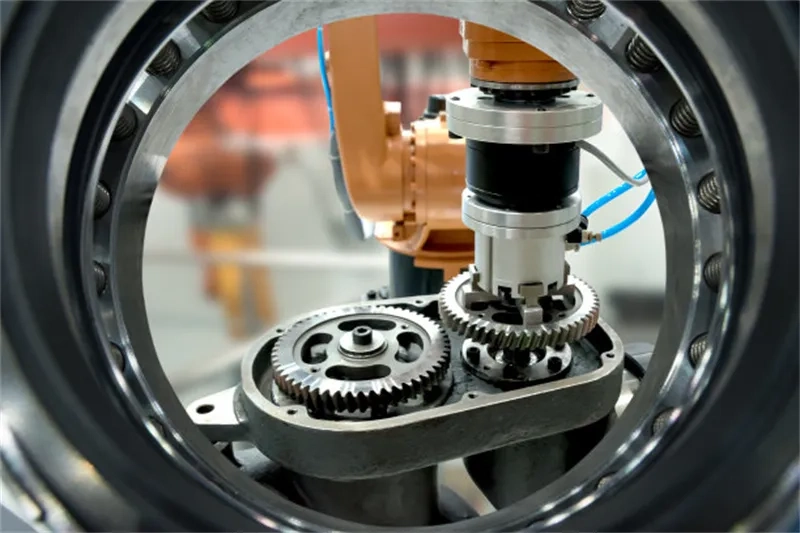
Grinding is a common method of metal cutting in the mechanical engineering industry and is also widely used in the roller bearing manufacturing sector. Bearing components that have undergone heat treatment and quenching may develop a network of cracks or fine, regularly arranged cracks during the grinding process; these are known as grinding cracks. Not only do they affect the appearance of the bearing components, but more importantly, they directly impact the quality of the roller bearing parts.
1. Characteristics of Grinding Cracks in Roller Bearings Grinding cracks differ markedly from typical quenching cracks. They occur exclusively on the ground surface, are relatively shallow, and are generally of uniform depth. Mild grinding cracks form parallel lines perpendicular or nearly perpendicular to the grinding direction, appearing as regularly arranged strip-like cracks; this constitutes one type of crack. More severe cracks exhibit a tortoise-shell pattern (closed network), with a depth of approximately 0.03-0.15 mm; these cracks become clearly visible after acid etching, representing the second type.
2. Causes of Grinding Cracks in Roller Bearings The formation of grinding cracks in bearings is caused by grinding heat, during grinding, the surface temperature of the bearing can reach 800-1000 °C or higher. The microstructure of quenched steel consists of martensite and a certain amount of retained austenite, which are in an expanded state (un-tempered). The expansion and contraction of martensite increase with rising carbon content in the steel, a factor of particular significance in the formation of grinding cracks on the bearing surface. The residual austenite in quenched steel decomposes under the influence of grinding heat during the grinding process, gradually transforming into martensite. This newly formed martensite concentrates on the surface of the component, causing localised expansion of the bearing surface, increasing surface stress, and leading to stress concentration. Continued grinding accelerates the formation of surface grinding cracks; Furthermore, the newly formed martensite has a high hardness, which also tends to accelerate the formation of grinding cracks during the grinding process. On the other hand, when parts are ground on a grinding machine, they are subjected to both compressive and tensile forces, which further promotes the formation of grinding cracks. If cooling during grinding is insufficient, the heat generated by the grinding process is sufficient to cause the thin surface layer to re-austenitise, followed by re-
hardening into quenched martensite. This results in additional microstructural stresses in the surface layer. Coupled with the rapid rise and fall in bearing surface temperature caused by the heat generated during grinding, the superposition of these microstructural and thermal stresses may lead to the formation of grinding cracks on the surface.
3. Measures to Prevent Grinding Cracks From the above analysis, it is clear that the fundamental cause of grinding cracks lies in the fact that the martensite formedduring quenching is in an expanded state and contains residual stresses. To reduce and eliminate these stresses, stress-relief tempering must be carried out, i.e., quenching followed by tempering, with the tempering time set to at least 4 hours. As the tempering time increases, the likelihood of grinding cracks occurring decreases. Furthermore, cracks may form if the bearing is rapidly heated to approximately 100°C and then cooled rapidly. To prevent cold cracks, the component should be tempered at a temperature of around 150-200°C. If the bearing is heated further to 300°C, the surface will contract again, causing cracks; to prevent this, the bearing should be tempered at approximately 300°C. It is worth noting that tempering the bearing at around 300 °C reduces its hardness; therefore, this method is not recommended. If grinding cracks still occur after a single tempering, a second tempering or artificial ageing treatment can be performed; this method is highly effective.
Grinding cracks are caused by grinding heat; therefore, reducing grinding heat is the key to resolving this issue. The wet grinding method is generally employed; however, no matter how much coolant is applied, it cannot reach the grinding surface in time during the grinding process, and thus fails to reduce the grinding heat at the grinding point. The coolant can only provide momentary cooling to the grinding point on the grinding wheel and the workpiece after the grinding path has passed, whilst simultaneously acting as a quenching agent on the grinding point. Consequently, increasing the volume of coolant used is one of the primary measures to minimise grinding heat in the grinding zone. If dry grinding is employed, a reduced grinding feed rate can help minimise grinding cracks. However, this method is not particularly effective and generates significant dust, which adversely affects the working environment; consequently, it is not recommended.
Selecting a grinding wheel with a softer hardness and coarser grit can help reduce grinding heat. However, coarser grains affect the surface roughness of the workpiece; this method cannot be used for parts requiring high surface finish, and is therefore subject to certain limitations. The process can be divided into rough and finish grinding: rough grinding is carried out using a soft grinding wheel with coarse grains to facilitate high-intensity grinding and improve efficiency, followed by finish grinding with a finer-grained wheel at a lower feed rate. Using two separate machines for rough and finish grinding is the most ideal method.
Selecting grinding wheel abrasives with good self-sharpening properties, promptly removing debris from the surface of the grinding wheel, reducing the grinding feed rate, increasing the number of grinding passes, and lowering the table speed are also effective ways to minimise grinding cracks.
The rotational speed of the grinding wheel and the workpiece is also a key influencing factor; excessive runout of the grinding wheel and significant movement of the workpiece are both contributing causes of grinding cracks. Promptly improving the rotational accuracy of the grinding wheel and the workpiece will help to eliminate as many factors as possible that lead to the formation of grinding cracks.
4. Methods for preventing grinding cracks on the surface of roller bearing steel In grinding operations, the primary methods for preventing the formation of grinding cracks on the surface of bearing steel are:
① Reduce grinding heat to address grinding cracks.
② Separate the process into rough and finish grinding; for rough grinding, use a soft grinding wheel with coarser grains.
3. Select grinding wheel abrasives with good self-sharpening properties, promptly remove debris from the grinding wheel surface, reduce the grinding feed rate, increase the number of grinding passes, and reduce the table speed.
4. Promptly improve the rotational accuracy of the grinding wheel and workpiece to eliminate, as far as possible, the factors causing grinding cracks.