
Read The Latest News From Us
Introduction to Bearings

Read The Latest News From Us
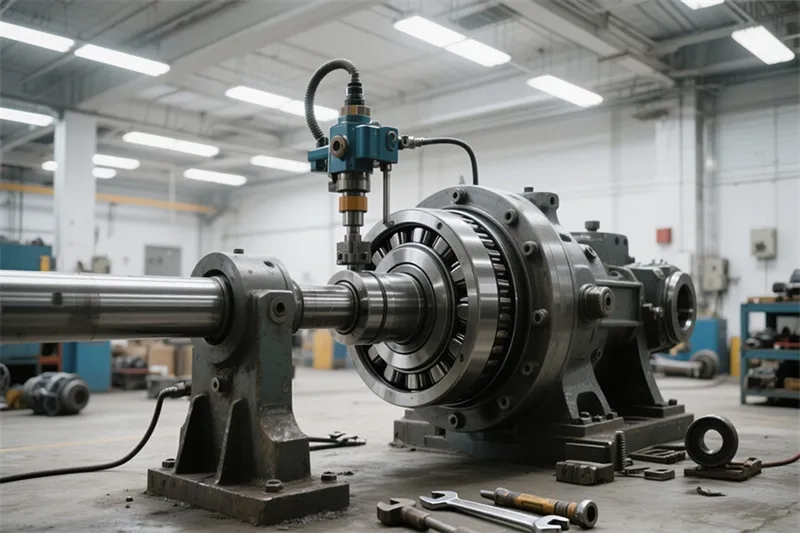
Generally speaking, bearing installation is determined by the bearing's structure, size, the location where it is to be fitted, and the nature of its shape. Similarly, lubrication and cleaning of the bearing prior to installation are also very important I. Points to Note Regarding Bearing Installation:
1. The fit between the bearing rings and the shaft is usually an interference fit, whilst the fit between the bearing housing and the housing bore is typically a clearance fit. Such fits are generally relatively easy to install. The bearing's central shaft should be securely fixed on the shaft to prevent the outer ring from rotating relative to the shaft, which could cause unnecessary wear. In termsof installation methods, rotational installation is more common, as this allows for a tighter fit between the inner ring and the shaft.2. When the outer ring of a cylindrical roller bearing has a loose fit with the housing, whilst the inner ring has a tight fit with the shaft, a specialised press designed for bearing installation can be used to press the bearing onto the shaft first. The assembly can then be installed into the housing as a single unit. When applying pressure during installation, ensure that the bearing's inner ring faces upwards, and insert a sleeve made of soft metal— such as copper or mild steel— as a spacer. When installing a sleeve with an inner diameter larger than the shaft diameter and an outer diameter smaller than the inner ring's flange, care must be taken to avoid applying pressure to the cage.
II. Lubricating oil is an essential protective material for bearings. It can fully penetrate the internal space of the bearing, coating the cage and rolling elements. Not only does this have no adverse effect whatsoever on the operation and performance of cylindrical roller bearings, but it also significantly extends the service life of the bearing. However, frequent use of lubricating oil can lead to the accumulation of oil residue. If this residue is not removed promptly, it will reduce the service life of the bearing; therefore, it must be removed.
1. When cleaning bearings, the balls, cage, and inner ring should be rotated out of the outer ring before being immersed in hot oil. When cleaning short cylindrical roller bearings, the rollers, cage, inner ring and outer ring should also be separated.
Note: During hot oil cleaning, the oil temperature should not exceed 20°C.
2. Bearings with hardened soft grease or rust-preventative paste should be immersed in hot engine oil at 100-200°C. Hold the bearing with pliers and use a brush to clean off the grease. When heated to 100-200°C, the soft grease or rust-preventative paste melts and is easily flushed out from the bearing's crevices. Sometimes, simply shaking the bearing repeatedly in the oil is sufficient for the grease to flow out of the crevices.
By employing these two methods, grease can be easily removed from cylindrical roller bearings, thereby enhancing the effectiveness of the lubricant, protecting the bearings and extending their service life. In most cases, bearing failure is caused by improper installation or lubrication. Therefore, bearing installation and lubrication maintenance are critical operations.