
Read The Latest News From Us
Introduction to Bearings

Read The Latest News From Us
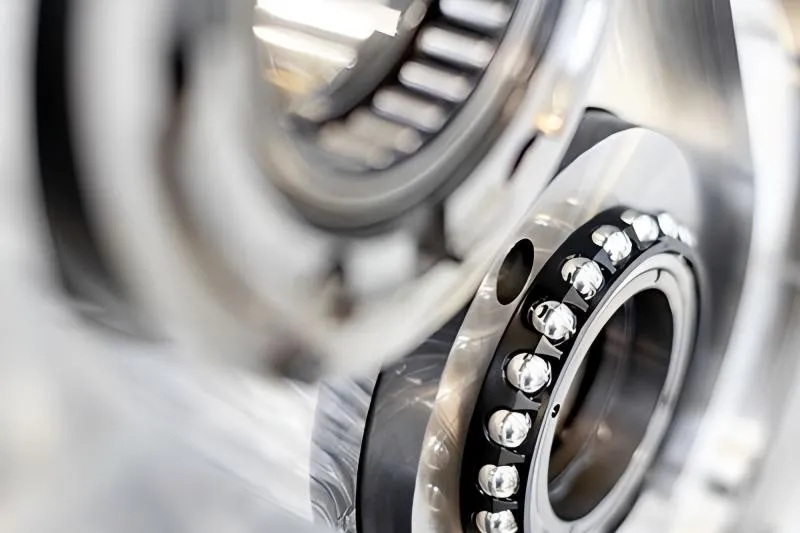
Before installation, bearings should be thoroughly cleaned with petrol or kerosene, dried, and ensured to be well-lubricated.
Bearings are generally lubricated with grease, though oil lubrication may also be used. When using grease lubrication, a high-quality grease with excellent properties— such as being free of impurities, and offering oxidation resistance, rust protection and extreme-pressure resistance-should be selected. The grease should fill 30%-60% of the volume of the bearing and bearing housing; it shouldnot be overfilled. Double-row bearings with a sealing structure and pump shaft-mounted bearings are pre-filled with grease and are ready for immediate use; they must not be cleaned.
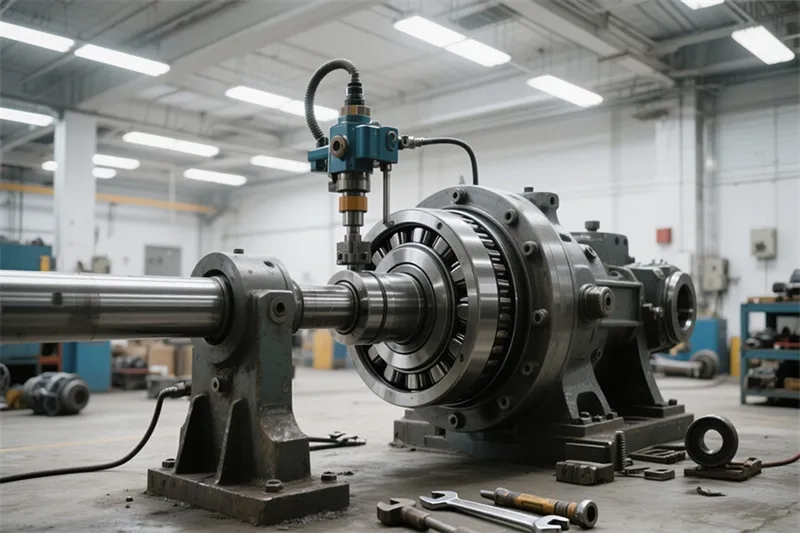
When installing bearings, uniform pressure must be applied around the circumference of the ring end face to press the ring into place. Do not strike the bearing end face directly with a hammer or similar tool, as this may damage the bearing. Where the interference fit is small, a sleeve may be used at room temperature to grip the end face of the bearing ring, and a hammer may be used to tap the sleeve, thereby pressing the ring in evenly through the sleeve. For large-scale installation, a hydraulic press may be used. During pressing, ensure that the end face of the outer ring is tightly pressed against the shoulder of the housing, and the end face of the inner ring is tightly pressed against the shoulder of the shaft; no gaps are permitted Bearing installation must be carried out in a dry, clean environment. Prior to installation, carefully inspect the machining qualityof the mating surfaces of the shaft and housing, the end faces of the shoulders, the grooves and the connecting surfaces. All mating surfaces must be thoroughly cleaned and deburred; any unmachined surfaces on castings must be completely free of moulding sand. Where the interference fit is significant, the bearing may be installed using oil bath heating or induction heating, with the heating temperature ranging from 80°C to 100°C; the maximum temperature must not exceed 120°C. At the same time, the bearing must be secured using nuts or other appropriate methods to prevent radial contraction upon cooling, which could result in a gap between the ring and the shaft shoulder.
After bearing installation, the clearance must be adjusted. The clearance value should be determined specifically according to the operating conditions and the magnitude of the interference fit. Where necessary, this should be determined by testing. Double-
row roller bearings and pump shaft-mounted bearings are supplied with pre-adjusted clearance and do not require further adjustment during installation. Following installation, a rotational test must be conducted. Initially, rotate the shaft or bearing housing; if no abnormalities are detected, proceed to unloaded, low-speed operation under power. Subsequently, gradually increase the rotational speed and load whilst monitoring noise, vibration and temperature rise. Should any abnormalities be detected, operation must be halted and an inspection carried out. The bearing may only be put into service once the operational test has been successfully completed.
Contact fatigue failure is one of the most common failure modes in various types of bearings; it occurs when the bearing surface is subjected to repeated cyclic contact stresses. Contact fatigue spalling on the surface of bearing components is a process in which a fatigue crack develops from initiation to propagation. Initial contact fatigue cracks first form at points of high orthogonal shear stress beneath the contact surface, then propagate to the surface, resulting in pitting or small flake-like spalling; the former is known as pitting or pitting spalling, whilst the latter is known as shallow spalling. If the initial crack originates at the interface between the hardened layer and the core, causing premature spalling of the hardened layer, this is termed hardened layer spalling. It is one of the common failure modes on the surfaces of various types of bearings. The continuous loss of surface metal due to relative slidingfriction between bearing components is known as sliding wear. Continuous wear causes changes in the dimensions and shape of the components, increases the bearing clearance, and degrades the surface finish of the working surfaces, thereby compromising rotational precision and preventing the bearing from functioning properly. Forms of sliding wear can be classified as abrasive wear, adhesive wear, corrosive wear, and fretting wear, of which abrasive wear and adhesive wear are the most common.