
Read The Latest News From Us
Introduction to Bearings

Read The Latest News From Us
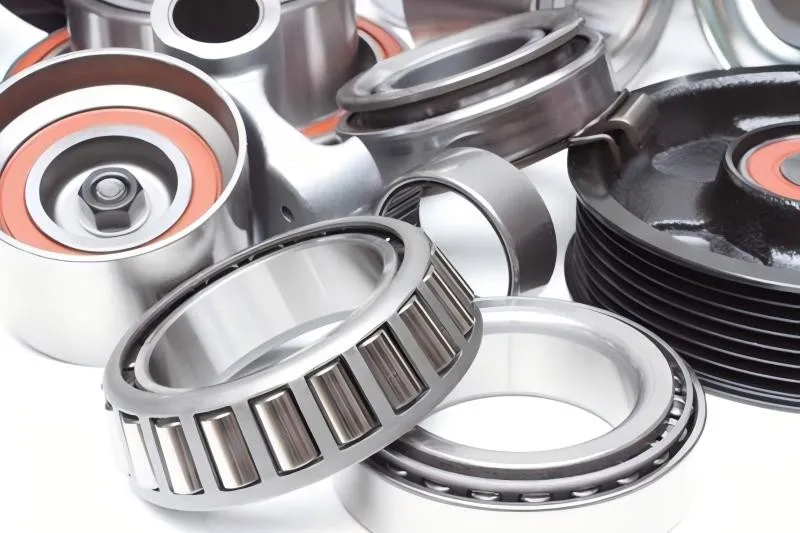
Impact noise from rolling elements and methods for its control: When larger-sized ball bearings or tapered roller bearings operate at low speeds under purely radial loads, the centrifugal force acting on the rolling elements is relatively small. Consequently, rolling elements located in the unloaded zone may strike the cage or raceway, causing noise. However, this noise disappears as the rotational speed increases. Methods for controlling rolling element impact noise include: appropriately reducing radial clearance and using bearings with cages that have a rational structure and are made of flexible materials.
Bearing grinding noise and its control methods: Grinding noise is a shrill metallic friction sound that can occur in cylindrical roller bearings under all operating conditions. It is most commonly found in larger-sized grease-lubricated bearings and is more likely to occur in grease where the base oil has deteriorated; it rarely occurs in oil-lubricated bearings.
Firstly, a rational and advanced structural design is essential for achieving a longer service life for tapered roller bearings. The manufacture of bearings generally involves multiple processing stages, including forging, heat treatment, turning, grinding and assembly. The rationality, sophistication and stability of each processing method also influence bearing service life. Among these, the heat treatment and grinding processes, which affect the quality of the finished bearing, often have a more direct relationship with bearing failure. Recent research into the altered layers on bearing working surfaces indicates a close relationship between the grinding process and bearing surface quality.
The metallurgical quality of bearing materials was once the primary factor influencing the premature failure of tapered roller bearings. With advances in metallurgical technology (such as vacuum degassing of bearing steel), the quality of raw materials has improved. The proportion attributed to raw material quality in bearing failure analysis has decreased significantly, yet it remains one of the principal contributing factors to bearing failure. The appropriateness of material selection remains a factor that must be considered in bearing failure analysis.
The primary objective of bearing failure analysis is to identify the main factors causing roller bearing failure based on extensive background information, analytical data and failure modes, so as to propose targeted improvement measures, extend the service life of bearings and prevent sudden premature failure.